Every bank holiday, thousands of UK homeowners pick up a power tool, and too many end up in A&E. Here’s what the data tells us, and how to stay safe while improving your home.
Most Common DIY Injuries in the UK: The Hidden Cost of Bank Holiday Home Improvements
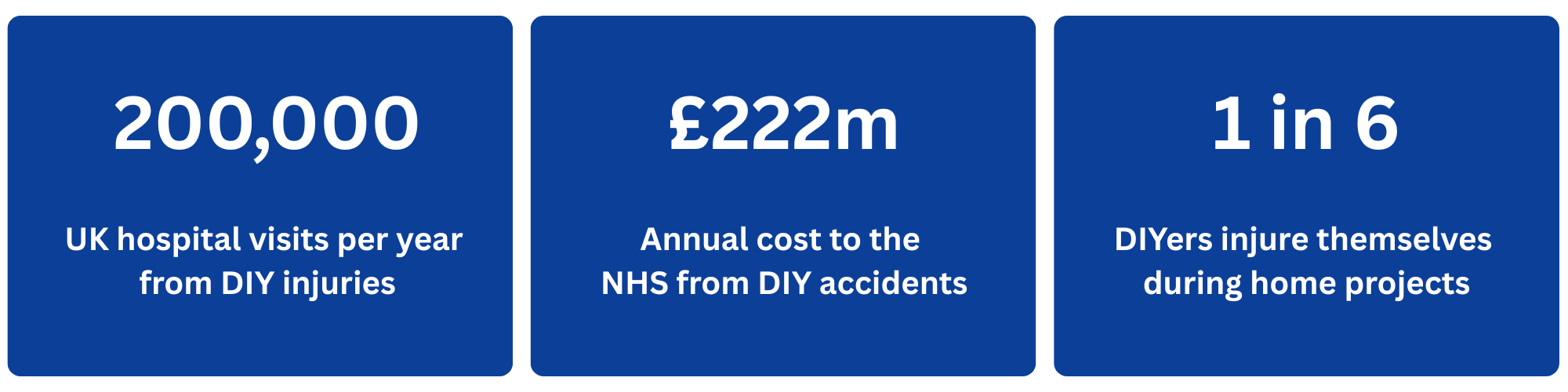
Admissions peak sharply between April and September, when the weather improves and bank holidays fall. May Bank Holiday are consistently the busiest single days for power-tool injuries at A&E.
Jan – Mar – 22%
Apr – Jun – 38%
Jul – Sep – 20%
Oct – Dec – 20%
Share of annual DIY hospital admissions by quarter. 58% fall in the Apr-Sep window.
What's in this article
Jump to section:
The most common DIY injuries
Power tools – 23%
5,000 hospital admissions/year. Drills, saws and sanders cause the most lacerations and fractures, particularly to hands and fingers.
Ladder falls – 22%
Over 6,370 hospitalisations per year. The second most common cause, and one of the most serious, with a high risk of fracture or head injury.
Hand tools – 17%
Hammers, chisels and saws account for 3,391+ hospital admissions. Slips while sawing or cutting carpet are among the most frequent culprits.
Lawnmowers – 6%
522+ admissions annually. Injuries often occur when cleaning blades. Catching hedge trimmer teeth and thorn infections are also common in spring.
Electrocution – 10%
Electrical burns and shocks, often from overloaded circuits or drilling into hidden cables. Fatal in a small number of cases each year.
Who's most at risk?
Men make up the vast majority of serious DIY casualties. 7,400 men treated for power tool and lawnmower injuries versus 1,200 women in the same period.
Ladder falls follow a similar pattern: 5,000 men compared with 1,260 women.
Children under 18 account for around 6% of all admissions, often as bystanders rather than participants.
Adults who spend bank holidays tackling ambitious jobs for the first time, inspired by shows like DIY SOS and Grand Designs, are particularly vulnerable.
7 ways to keep your bank holiday out of A&E
Wear proper PPE
Safety glasses, gloves, and steel-capped footwear before you pick up any tool – power or otherwise.
Check before you drill
Use a cable and pipe detector. Drilling into a hidden electric cable is one of the most common routes to A&E.
Ladder safety first
Always have a second person steadying the base. Never lean or overreach – reposition the ladder instead.
Keep children clear
Cordon off your work area. Bystander injuries from flying debris are entirely preventable.
Know your limits
Gas work and major electrics are legally restricted to qualified tradespeople. Don’t attempt them yourself.
Stock a first aid kit
Bandages, eye wash, and antiseptic. Minor cuts treated promptly at home avoid unnecessary A&E waits.
Use NHS 111 first
For non-emergency injuries, call 111 or visit an urgent treatment centre. Reserve A&E for serious emergencies.
Plan, don’t rush
Most accidents happen when people rush jobs or ignore fatigue. If you’re tired, stop – the shelf can wait.
Thinking of selling after your renovation?
Quick Move Now buys any property in any condition across England and Wales. We buy with our own cash, which means we can complete in as little as 7 days if required. Selling direct to a cash home-buying company like us eliminates the usual uncertainties associated with the open market.
There are no contracts or fees, and we cover your legal costs. Get a free, no-obligation cash offer today.
Categories
- Auction (4)
- Buy-to-let (10)
- Buying Advice (52)
- Divorce (1)
- Downsizing (6)
- FAQs (31)
- Financial Issues (22)
- Home Improvements (13)
- Inheritance (7)
- Relocation (3)
- Retirement (9)
- Selling Advice (77)